Learn · Rules, decoded
Minor variance, decoded: the four tests your project has to pass
What a minor variance is, who decides, and why "it's only half a metre" is not an argument.
Pufferfish Architects · November 2026 · 5 min read
"It's only half a metre."
It feels like a winning argument. It isn't one.
If your project breaks a zoning rule by a little, Ontario gives you a way to ask for permission. It's called a minor variance. And "minor" doesn't mean what you think.
Minor is not a measurement.
First, what is it?
Every lot has a zoning by-law. It sets the use, the height and how much of the lot you may cover. It also sets how far the building must sit from the lot line (the setback).
Now your design misses one of those. The addition sits a little too close. The roof runs a little too high.
You have two roads. Change the by-law itself, which is a rezoning: slow and heavy. Or ask for a small exception for your lot alone.
That second road is the minor variance.
Who says yes?
Not the person at the planning counter.
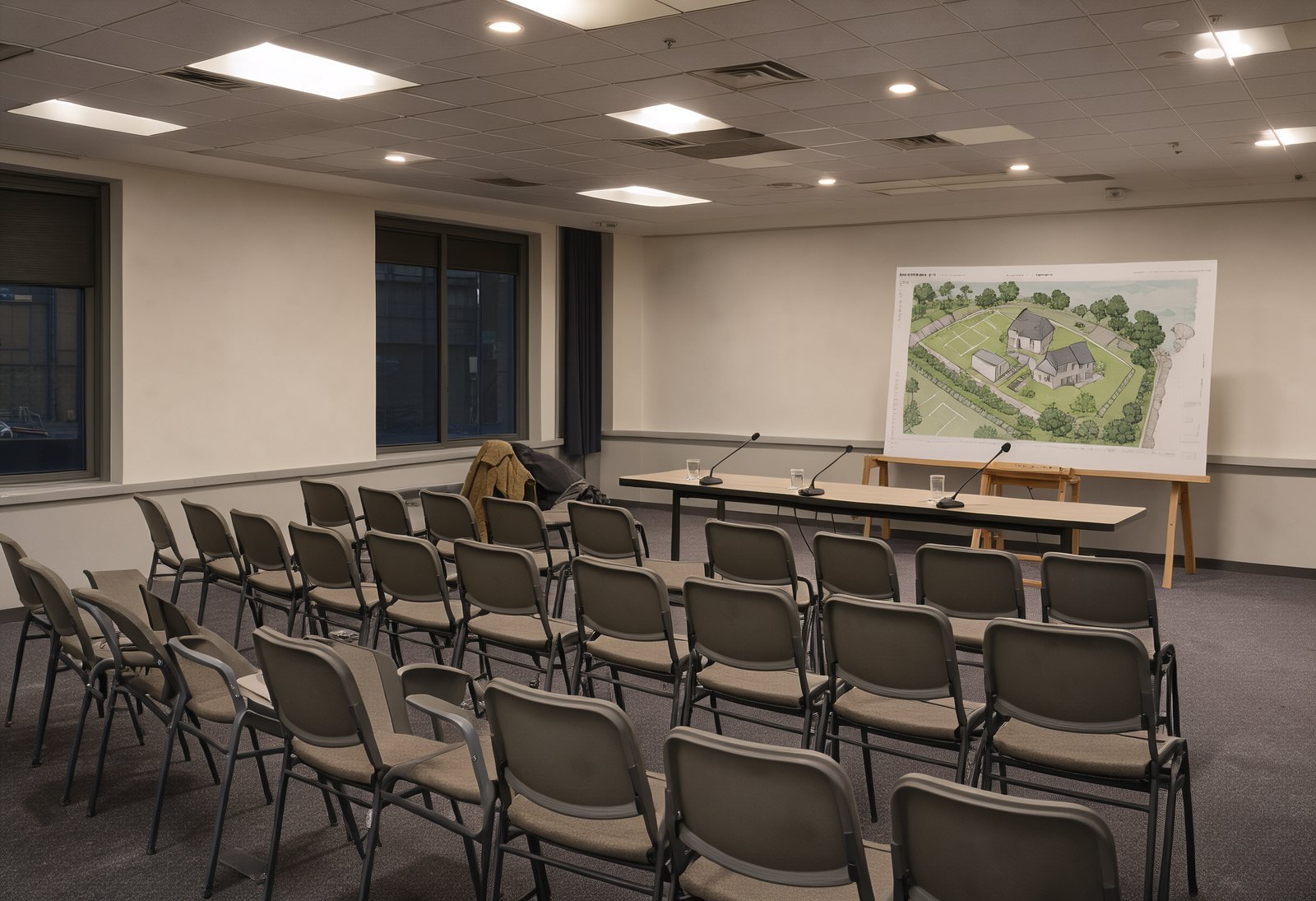
The decision belongs to the committee of adjustment: a panel appointed by your municipal council. It holds a public hearing. You speak. So can anyone else who wants to be heard.
(Yes, that includes the neighbour. Especially the neighbour.)
The four tests
They come from section 45 of Ontario's Planning Act. Your variance has to pass all four. Not three and a half.
- Is it minor? The Act never defines the word. Committees look at the impact, not just the size.
- Is it desirable for the appropriate development or use of the land? Not desirable for you. For the land.
- Does it keep the general intent and purpose of the zoning by-law? Every rule is there for a reason. Does your design still respect the reason?
- Does it keep the general intent and purpose of the official plan? That's the municipality's long-range plan for how it grows.
Fail one and the other three don't save you.
Why "it's small" doesn't work
Picture half a metre beside a blank garage wall. Now picture the same half a metre in front of your neighbour's kitchen window.
Same number. Different impact.
So the case you bring is not "it's small". The case is this: here is what the rule protects, and here is how our design still protects it.
That's a job for drawings. Where the shadow falls. What the neighbour sees. How the water drains. A committee can't weigh what it can't see.
What happens, in order
The Planning Act sets out the path. It's shorter than people expect.
- Apply. The owner applies to the committee, or someone the owner has authorized in writing does it.
- Notice goes out. The committee has to give notice of the application before it hears it.
- The hearing. Held in public. The Act says within thirty days after the application is received.
- The decision. In writing, with reasons, agreed by a majority of the members who heard you.
- The wait. Twenty days for an appeal. If none comes, the decision is final and binding.
Those are the Act's numbers. Every municipality runs its own calendar and fees, so ask yours for its current schedule.
What a variance is not
It's not a rezoning in disguise. A variance bends one rule for one lot and keeps the by-law's intent. If your project needs a different use or a very different building, you're asking to change the by-law, and that's a decision for council.
The committee does have one other power worth knowing. If your building was lawful before the by-law changed around it, the committee can permit you to enlarge or extend it.
(Planners call that a legal non-conforming use. You can call it "the building that was here first".)
The honest bit
The committee can say no.
It can also say yes with conditions attached. And a decision can be appealed to the Ontario Land Tribunal within 20 days, so a yes is not final the night you hear it.
We don't promise approvals. Nobody honest does. What we can do is bring a case that answers all four tests before anyone has to ask.
Your turn
- Find the rule you're breaking. Write down the number the by-law allows and the number you want.
- Ask why the rule exists. Light, privacy, drainage, the look of the street. If you can't say, you can't argue the intent.
- Talk to your neighbour before the notice does. A surprise at a hearing is rarely a nice one.
Minor is not a measurement. Make the case, not the excuse.
Quick answers
What are the four tests for a minor variance in Ontario?
Under section 45 (1) of the Planning Act the variance must be minor, must be desirable for the appropriate development or use of the land, must maintain the general intent and purpose of the zoning by-law, and must maintain the general intent and purpose of the official plan. All four must be met.
Who decides a minor variance?
The committee of adjustment: a panel of at least three people appointed by the municipal council. It decides by majority, in writing, with reasons.
How long does a minor variance take?
The Planning Act says the hearing is held within thirty days after the application is received. After the decision there is a twenty-day appeal period before it becomes final. Municipal schedules vary, so check with your municipality.
Can my neighbour stop my minor variance?
A neighbour can speak for or against it at the public hearing, and the committee must hear them. The Act's list of who may appeal is the applicant, the Minister, and a specified person or public body with an interest in the matter.
Can a minor variance come with conditions?
Yes. The committee may grant it for a set time and on the terms and conditions it considers advisable, and it writes them into the decision.
What is the difference between a minor variance and a rezoning?
A minor variance is an exception to the zoning by-law for one property that keeps the by-law's intent, decided by the committee of adjustment. A rezoning changes the by-law itself and is decided by council.